
Best Bus Size for School Trips: A Simple Guide by Group Size
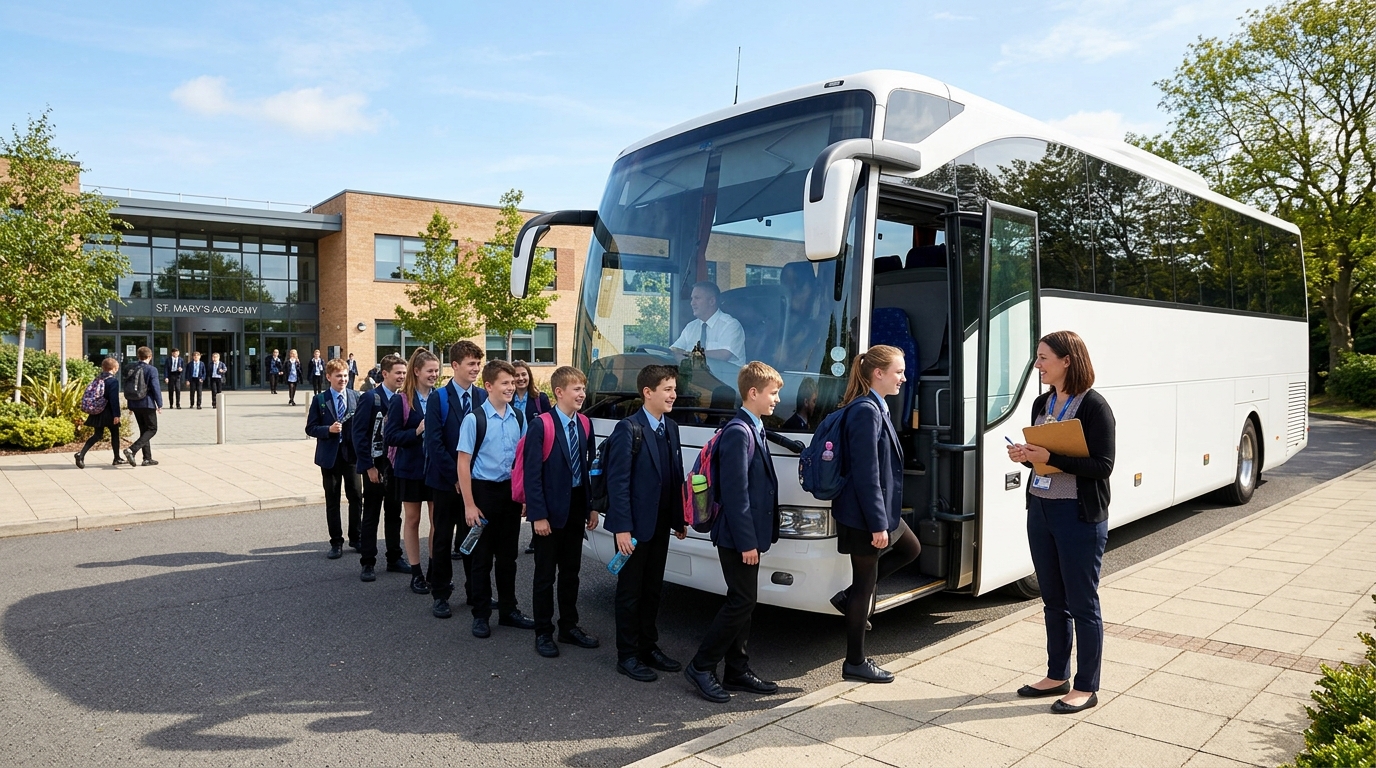
Booking transport is one of the first jobs when you plan a trip. Pick a bus that is too small and students will be squeezed. Pick one that is too big and you pay for empty seats. So what is the best bus size for school trips? It depends on your group size, the distance and how much luggage you carry. This guide makes the choice easy.
Bus Sizes at a Glance
Seat counts change by brand and model, but these are the common sizes you will see when you look at school trip bus rental options:
| Bus type | Typical seats | Best for |
|---|---|---|
| Van | 8 to 12 | Very small groups, club activities |
| Minibus | 15 to 25 | Single classes, sports teams, city visits |
| Midibus | 30 to 39 | Medium groups, narrow roads |
| Coach | 45 to 60 | Full grades, long-distance trips |
How Many Students Fit on a Bus?
A common question is how many students fit on a bus. The seat count is only the starting point. Remember to count teachers, helpers and any staff who travel with you. Leave a few spare seats for bags and for students who feel unwell and need extra space.
A simple rule: add up all passengers, then add about 5 to 10 percent extra. That total is the number of seats you should ask for.
Bus Size by Group Size
Use this quick guide to match bus size by group size:
- Up to 15 people: A van or small minibus works well.
- 16 to 25 people: Book a minibus. This is a popular choice for minibus hire for school field trips with one class.
- 26 to 38 people: A 30 seater bus for a school trip is a good fit. It is easier to drive in busy towns than a full coach.
- 40 to 55 people: A 50 seater bus for a school trip suits a full grade or a large class group.
- 60 people or more: You will need more than one bus. See the example below.
How Many Buses Do I Need for 100 Students?
This is a very common planning question. Here is a simple example. If you have 100 students and 6 teachers, you have 106 passengers. Two 55-seat coaches give you 110 seats, which is just enough. Two 50-seat coaches would be too small. In that case, add a minibus or choose three buses so nobody is left standing.
Using two or three smaller buses can also help. Groups stay easier to manage, and each bus has its own teacher in charge.
Minibus vs Coach for School Trips
Here is how the two compare when you think about minibus vs coach for school trips:
- Minibus: Easier to park, better on narrow roads and cheaper for small groups. Space for bags is limited.
- Coach: More legroom, more luggage space and often air conditioning and a better ride. It is more comfortable for long journeys and costs less per student when the bus is full.
If your group is small and the trip is short, a minibus is usually enough. For a full day out or a long journey, a coach is often the better choice.
How to Choose a Bus for a School Trip
Follow these steps if you are wondering how to choose a bus for a school trip:
- Count everyone. Include students, teachers and helpers.
- Check the distance. Long routes need comfortable seats and rest stops.
- Think about luggage. Overnight trips and sports gear need extra storage.
- Look at the route. Narrow roads or small parking areas suit smaller buses.
- Plan for special needs. If a student needs extra support or access, ask about it early.
- Compare quotes. Ask what is included, such as driver, fuel and waiting time.
School Trip Transport Options
When you look at school trip transport options, you will usually choose between a rented bus with a driver, the school's own bus, or public transport. Public transport can work for very small groups, but timings are fixed and seats are not guaranteed. A rented bus gives you control over pick-up time, route and stops. That is why many schools choose it for field trips, sports days and educational tours.
School Trip Transport Safety Checklist
Safety matters more than price. Before you confirm, check this school trip transport safety checklist:
- The bus has a valid licence, insurance and a recent safety check.
- The driver is experienced, licensed and well rested.
- Seat belts, emergency exits and a first aid kit are in working order.
- Every student has a seat. Nobody stands or sits in the aisle.
- Teachers have the driver's contact number and the planned route.
How Much Does It Cost to Rent a Bus for a School Trip?
Many teachers ask how much it costs to rent a bus for a school trip. The price depends on bus size, distance, trip length and waiting time. Peak season dates can also cost more. To get a fair quote, share your date, pick-up point, destination, group size and return time. Ask for the full price so there are no surprises later.
Field Trip Bus Rental: Tips for a Smooth Day
- Book early, especially in busy school months.
- Share the final student count a few days before the trip.
- Plan pick-up times with some buffer for traffic.
- Brief students on simple bus rules before you leave.
Bus Rental for Schools with Alinsaf Transport
Choosing the right size does not have to be hard. If you need bus rental for schools, Alinsaf Transport can help you match the right vehicle to your group, route and budget. Tell the team how many students and teachers are travelling, and they can suggest the best option for your school trip bus rental.
Final Thoughts
The best bus size for school trips is the one that seats everyone comfortably, fits your route and stays within budget. Count your passengers, add a few spare seats, think about distance and luggage, and always check safety first. A little planning keeps students happy and teachers stress-free.